‘Oh, I couldn’t possibly speak on camera – I would be far too nervous!’
I have heard this so many times from a business owner.
It’s such a natural thing to say, even though deep down they know that somebody needs to represent the business in the film they plan to make, delivering those all-important key messages, and the best person to give an overview is probably themselves.
Panic sets in. Soon they are overthinking themselves into oblivion. What if I’m no good? What if I look like a fool? What if I go blank when staring into a camera? Help!
The first thing I say to someone who’s worrying about appearing on camera is this:
Relax.
I will not let you look silly, awkward, or worst or all boring, in the film that we will make together!
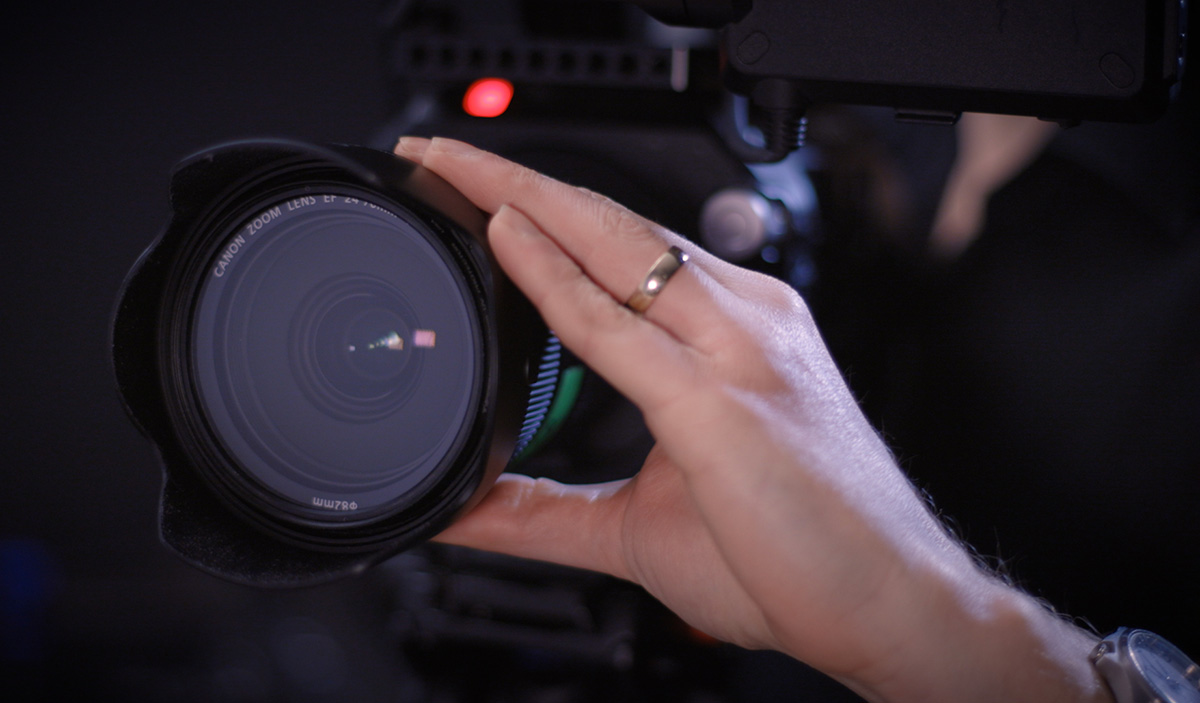
In fact, unless you want to deliver your message directly ‘to camera’ – i.e. looking into the lens (which, to me, only works for something that feels like a public service announcement – which usually involves a teleprompter like a newsreader would use), you will not be looking at a camera at all.
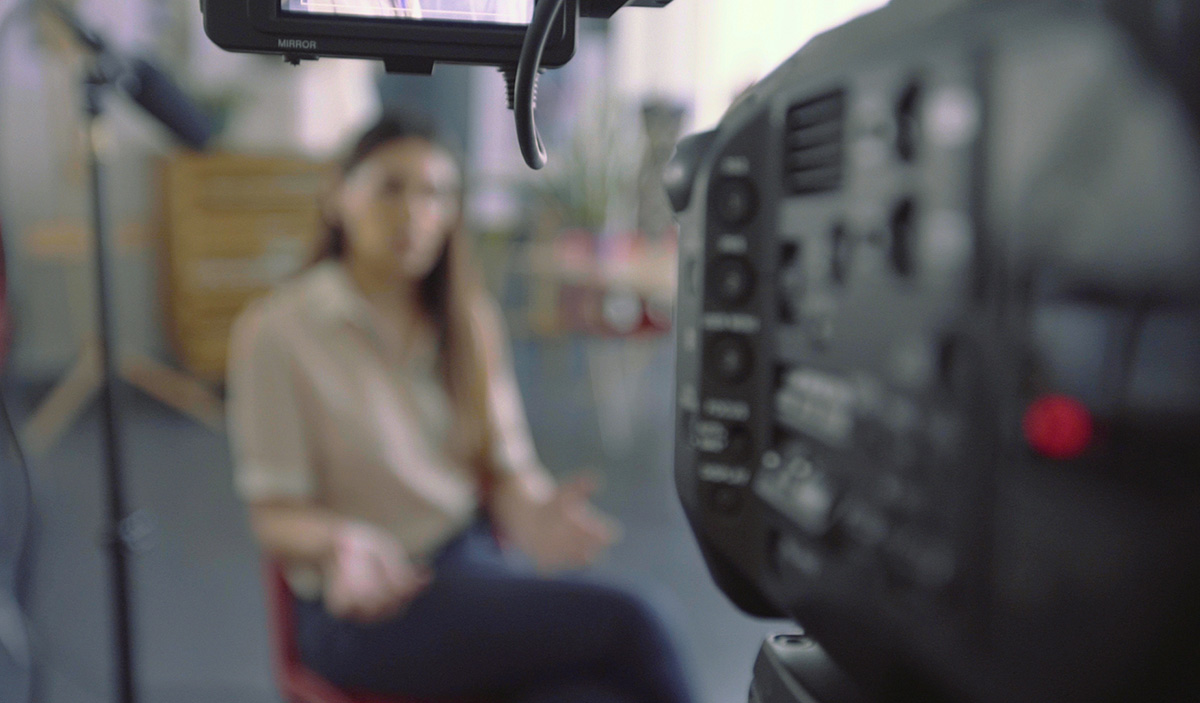
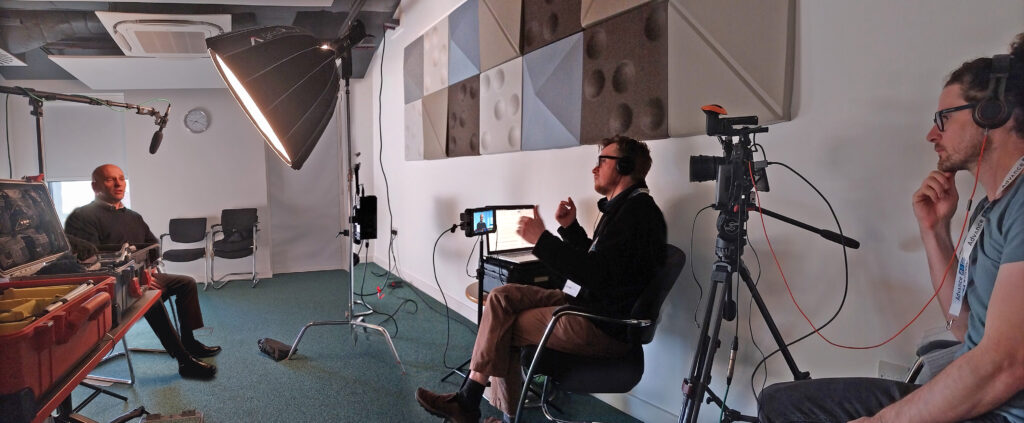
What’s more likely is that you will be looking at a person. Somebody sitting next to the camera – an interviewer, like me.
Ah, suddenly that feels a bit easier, doesn’t it? You’re not looking at a scary lens, you’re talking to a friendly face – who will prompt, encourage, nod, smile and most of all, be receptive to what you are saying, and steer you back on track if you get lost.
The interviewer doesn’t get seen or heard, so if requested it doesn’t even have to be one of our team. If you’re used to talking about your key messaging with a supportive colleague who knows it all as well as you do, they can certainly fill this role. So talking to an interviewer is often the first step to make speaking on camera ten times easier.
The next thing to consider usually dispels another common fear: you will not be asked to learn a script and recite it back. One thing I’ve seen people do (usually on some shoots done by other companies that have not been well planned) is arrive with hundreds of bits of paper covered with notes, which is everything they think they want to say. It’s usually far too much messaging, way beyond the length of film that has been requested, and they are nervously trying to learn the whole piece like an awkward, lengthy script.
This can be avoided by us having a full briefing chat before the shoot where we work out exactly the key messaging that needs to come across. Next we turn this into a simple shooting plan – a sort of ‘cheat sheet’ that can be followed on the day. The intention is not to give the interviewee a script to learn, but to loosely bullet-point the key ideas. This leaves room for improvisation and often improvement when speaking, and will feel far less artificial.
For those interviewees who are still nervous and don’t want to go the slightest bit away from their written bullet points, I always get them to put the paper down out of sight. I use my copy, we simply go through it one point at a time and I simply get them to say it back to me in their own words.
Once edited down to the very best sections, this creates a far more relaxed impression – less like a scripted message and more just an honest conversation, like you would have with a friend in the pub or at the dinner table. By using the cheat sheet more as a memory jogger or a prompt rather than a script, and just answering the questions from the heart, you end up with a far better result.
Another trick we use is to do a warm-up, which sounds obvious but not everybody bothers with this! We will normally begin with a few interview questions that we do not intend to use the answers to. This allows the interviewee to just relax into the setting and forget about all the equipment around them – they can just begin chatting to the interviewer and enjoy themselves. After answering a few questions, the interviewee has normally warmed up, relaxes and becomes better with what they’re actually trying to say, which is the important stuff.
As the interview progresses, something amazing happens: somebody who was nervous and in a complete state at the beginning will slowly become relaxed and confident. With some gentle encouragement, they will get all of their messaging across in their own words in a nice calm manner. By the end of the interview, it’s always a lot of fun to ask the same question again that was asked at the beginning, and you often get a totally different style of response. When the two takes are put side-by-side they are like night and day: the confidence level has gone through the roof. The interviewee is often at their most relaxed at the very end of the interview, so this is often when we get some of our key lines that will appear at the beginning of the film.
Some of the best compliments we’ve had are when an interviewee watches the finished film and says they cannot believe it is the same footage that we shot with them on the day when they felt so nervous and worried about appearing on camera.
The last point I will make is this: the best interview-driven films will not actually show the interviewee on camera the whole time, in fact they often just use their voice for whole sections and are instead showing much more interesting footage which illustrates what is being talked about, commonly referred to as supporting footage or ‘b-roll’. This not only makes the film much more interesting to watch, but crucially hides a million jump cuts and allows us to join all of your best sentences together. So just because we are filming you the whole time doesn’t mean we are going to use all of it visibly – far from it.
So, there you go – the stakes are not high. It’s not live, it’s not the news at ten, and we are not doing open-heart surgery. Half the fun on the day is trying out ideas and seeing what works.
To sum up, I’ll just say this. Video doesn’t have to be scary if it’s done right!
Ready to talk about your business? Get in touch: info@unexploredfilms.com
written by Steve Ramsden